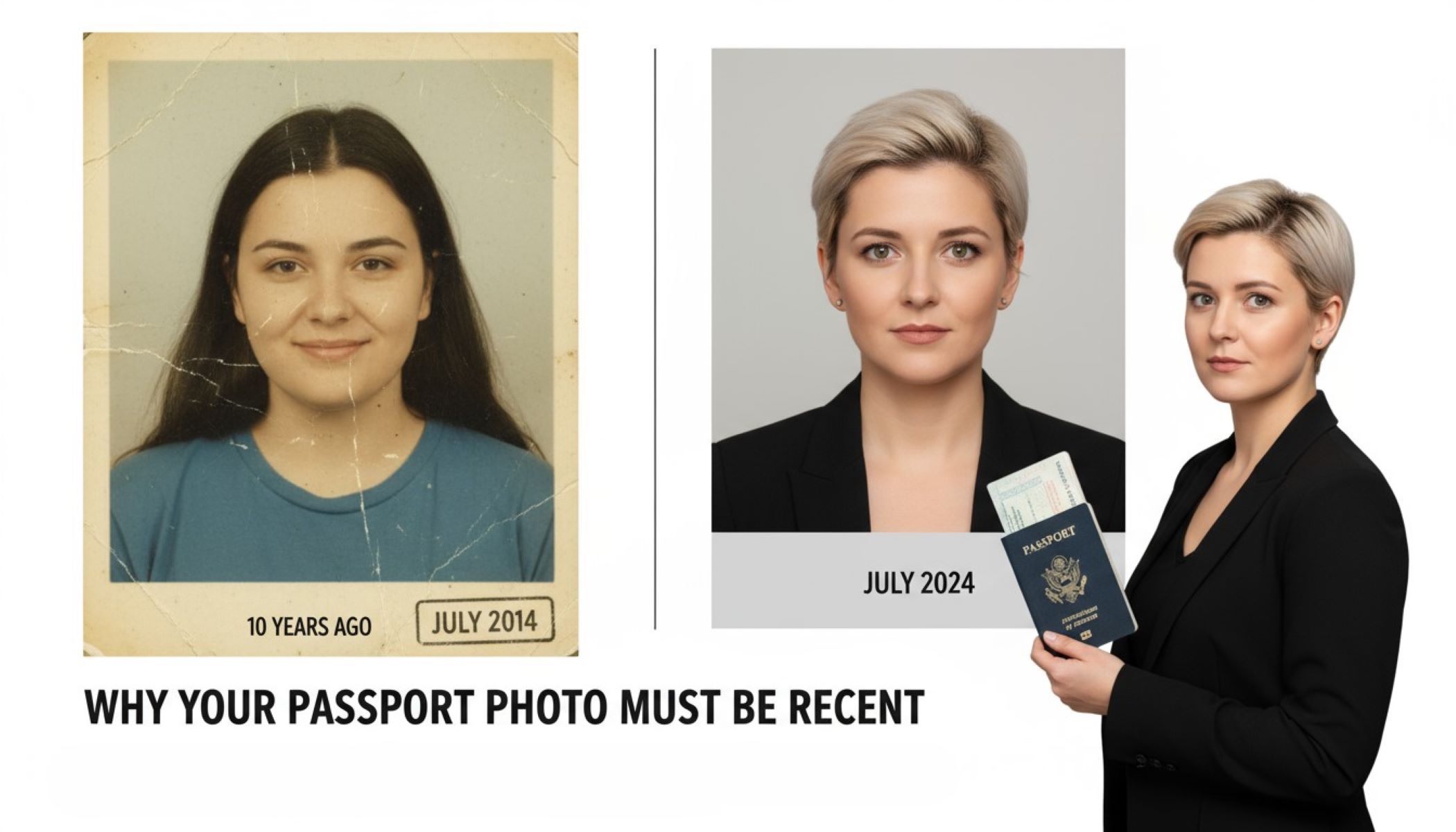
Have you ever paused to wonder why passport authorities insist your photo be recent? It’s not just bureaucracy at play—there’s a solid reason behind this rule. Passport photos are more than a formality; they are a critical part of your identity verification. A recent photo ensures that officials can accurately match your current appearance with the document. Imagine trying to get through airport security with a picture from ten years ago—you’d probably raise a few eyebrows!
The Purpose of a Passport Photo
Passport photos are much more than a simple snapshot—they are the cornerstone of your identity when traveling internationally. Think of them as your official “face card” that links your physical appearance to the passport document. Without a clear and accurate photo, it becomes extremely difficult for authorities to confirm that the person holding the passport is actually the person it belongs to. This is especially crucial in airports, border checkpoints, and security screenings where first impressions matter the most. A passport photo ensures that your identity can be quickly verified at a glance, reducing delays and confusion during travel.
One of the primary purposes of a passport photo is identity verification. Security personnel rely on these photos to match travelers to their official records. In a world where millions of people cross borders daily, a standardized and recent photo provides a reliable reference point. Even small differences in appearance can make a huge difference for identification, which is why authorities stress that photos must be recent and clearly show the face without obstructions. This is also why rules about neutral expressions, proper lighting, and visible facial features are so strict—it all contributes to ensuring your identity is unmistakable.
Another critical role of passport photos is preventing fraud. Outdated or poor-quality images make it easier for identity thieves and counterfeiters to misuse travel documents. If a photo no longer resembles the traveler, criminals could theoretically exploit the discrepancy, potentially gaining access to restricted areas or misrepresenting themselves. By enforcing the requirement for recent and accurate photos, authorities reduce the risk of passport-related crimes. In this way, a simple photo becomes a vital tool in protecting not just individual travelers, but national and international security.
Finally, passport photos are tied to legal requirements set by governments worldwide. Each country has strict specifications regarding size, background, and how recent the photo must be. These regulations are not arbitrary—they exist to maintain consistency and ensure that every traveler’s identity can be reliably verified. Failing to comply with these standards can result in delays, rejected applications, or even denied boarding. Essentially, passport photos serve as a universal language of identification, recognized and enforced across borders, making them indispensable for safe and lawful travel.
How Recent is “Recent”?
| Country | Definition of “Recent” | Reason for Time Limit | Typical Validity Period | Notes / Tips |
| United States | Photo must be taken within the last 6 months | Facial features can change over time, affecting recognition | 6 months | Ensure no major hairstyle or facial hair changes since the photo was taken |
| United Kingdom | Photo must reflect your current appearance | Prevents issues with identity verification and fraud prevention | 6 months | Avoid using old photos from previous passport applications |
| India | Photo should be recent and clear | Children and adults’ appearances can change, especially for kids | 6 months | For children, consider updating more frequently if significant growth occurs |
| Canada | Photo should be recent, typically taken within 6 months | Helps border control and biometric systems match identity accurately | 6 months | Lighting, background, and head position are strictly regulated |
| Australia | Photo must accurately show current appearance | Outdated photos may cause delays or rejection during travel | 6 months | Avoid heavy makeup or accessories that could alter appearance significantly |
Physical Changes That Matter
When it comes to passport photos, even minor changes in your appearance can make a big difference. These subtle shifts might seem trivial to you, but for border control officers or facial recognition systems, they can create confusion or delay your travel. Here’s a detailed list of physical changes that can render a passport photo outdated:
- Haircuts and Hair Color: A drastic change in hairstyle, whether it’s cutting long hair short, growing it out, or trying a completely new color, can make it difficult for authorities to recognize you. Even subtle shifts like bangs, layers, or highlights can affect the way your facial frame is perceived.
- Facial Hair: Adding or removing facial hair—like growing a beard, mustache, or sideburns—can significantly alter your face’s shape and silhouette. A shaved face versus a bearded one can be almost unrecognizable, making it harder to match your photo to your current appearance.
- Glasses and Eyewear: Changing your glasses’ style, size, or switching to contact lenses can impact how your eyes and facial structure are seen. Certain frames may obscure parts of your face, while reflections or tinted lenses can interfere with photo clarity.
- Weight Changes: Even minor fluctuations in weight can affect facial features such as cheekbones, jawline, and the fullness of your face. Over time, weight gain or loss can make your photo look noticeably different, especially when compared side by side with your passport.
- Aging: Natural aging processes like wrinkles, fine lines, or changes in skin texture can make older photos less accurate. This is particularly important for travelers over 40, whose facial features may shift more noticeably in a few years.
- Makeup: Heavy or drastically different makeup from what was worn in your passport photo can change how your face is recognized. This includes lipstick shades, eye makeup, or contouring that significantly alters facial contours.
- Dental Changes: Significant dental work, like braces, veneers, or other alterations to your smile, can subtly change the shape of your mouth and jawline, which can affect identification.
- Scars or Tattoos: New facial scars, piercings, or visible tattoos can make your appearance markedly different from the photo. Even small changes in facial markings can impact recognition systems.
- Health Changes: Illness, swelling, or other health-related changes can temporarily or permanently alter your facial features, making old photos less reliable.
The Role of Facial Recognition Technology
In today’s world, facial recognition technology has become a cornerstone of border control and airport security. This sophisticated software analyzes the unique features of your face—such as the distance between your eyes, the shape of your nose, and the contours of your jawline—to match your live image with the one on your passport. The goal is simple: to quickly and accurately verify identity while minimizing human error. However, this system relies heavily on the accuracy of the passport photo. If the photo is outdated or does not reflect your current appearance, it can significantly increase the chances of mismatches, slowing down security processes and potentially causing unnecessary complications.
One major impact of using an outdated passport photo is a higher likelihood of false negatives in facial recognition systems. A false negative occurs when the system fails to recognize you, even though you are the legitimate passport holder. This can happen when physical changes—like a new hairstyle, facial hair, or weight fluctuations—alter your appearance compared to the stored photo. Such mismatches force security personnel to manually verify your identity, which can take extra time and disrupt the flow of passengers through checkpoints.
Manual verification is another critical factor affected by old photos. When the technology cannot confidently confirm a traveler’s identity, human officers must step in to cross-check documentation, often using additional identification or biometric tools. This not only increases the workload for security staff but also introduces delays for travelers. Even small discrepancies between the live image and the passport photo can trigger secondary screening, making the process slower and more stressful, especially during peak travel hours.
Finally, travel delays and increased scrutiny are inevitable consequences of relying on outdated photos in a facial recognition system. Airports and immigration checkpoints are designed for efficiency, and any mismatch can create bottlenecks, leading to longer queues and frustrated passengers. In some cases, travelers may even face denied entry or additional questioning if their appearance has changed drastically. Keeping passport photos recent ensures that facial recognition technology works as intended, allowing smooth, quick, and secure verification, and ultimately reducing the risk of travel interruptions caused by mismatched images.
Why Security Takes It Seriously
| Aspect | Explanation | Impact of Old Photo | Security Consequences | Traveler Implications |
| Identity Verification | Agencies need to confirm that the passport holder matches the photo | Outdated photos make it harder to verify identity | Increased risk of fraudulent entry | Travelers may be subjected to additional screening or questioning |
| Crime Prevention | Ensures criminals or unauthorized individuals cannot use stolen documents | Old photos may allow impersonation | Potential threats to national security | Delays in travel and possible denial of entry |
| Border Control Efficiency | Helps immigration officers quickly process travelers | Mismatched photos slow down verification processes | Bottlenecks at airports and checkpoints | Longer wait times and stress during travel |
| Biometric System Accuracy | Facial recognition and other biometric tools rely on current images | Outdated photos reduce accuracy of automated systems | Higher false negative or false positive rates | Manual checks required, increasing travel time |
| International Compliance | Passport standards are enforced globally to maintain consistent security | Non-compliance with photo standards can lead to rejection | Passport may be invalid for international travel | Travelers may need to retake photos or update passports before travel |
Common Mistakes People Make
Many travelers underestimate the importance of a recent passport photo, and this can lead to delays, rejections, or even travel interruptions. Here’s a detailed list of common mistakes people make when submitting passport photos:
- Using Old or Childhood Photos: Some travelers try to reuse old pictures, even from years ago or from childhood. While nostalgic, these photos often no longer resemble the applicant and can lead to rejection. Facial features change over time, so what looked accurate a few years ago may be completely outdated today.
- DIY Photos with Outdated Devices: Taking photos at home with old cameras or smartphones can result in poor-quality images. Blurry shots, low resolution, improper lighting, and unflattering angles can make a photo unacceptable. Even minor issues like shadows across the face or inconsistent background lighting can lead to your application being rejected.
- Relying on Social Media Pictures: Social media selfies, selfies with filters, or professionally edited photos may look great online, but they are completely unsuitable for passport use. Filters, retouching, and unconventional angles can distort your facial features, making it impossible for security personnel or facial recognition software to verify your identity.
- Incorrect Backgrounds: Many people fail to use a plain, light-colored background as required by passport regulations. Patterns, textures, or busy backgrounds can distract from your face and result in photo rejection.
- Inappropriate Expression: Some travelers smile widely, frown, or make unusual expressions. Passport photos require a neutral expression with a closed mouth to ensure the face is accurately recognized. Overly exaggerated expressions can make it harder for authorities to match the photo to your live appearance.
- Wearing Accessories: Hats, scarves, and sunglasses can obscure facial features. Even everyday accessories like large earrings or heavy makeup may affect the clarity of your photo. Religious head coverings are generally allowed, but they must not hide any facial features used for identification.
- Ignoring Guidelines for Glasses: Wearing glasses that reflect light or hide your eyes can cause a photo to be rejected. Many countries require applicants to remove glasses unless medically necessary, so failing to follow these rules is a common mistake.
- Submitting Damaged or Altered Photos: Photos that are torn, folded, or digitally altered in ways that affect your appearance will not be accepted. Even small imperfections, like scratches or smudges, can result in rejection.
- Not Updating After Physical Changes: People often forget to take a new photo after major changes like haircuts, significant weight change, new facial hair, or dental work. These changes can make a previous photo obsolete, causing issues with identification at borders.
- Failing to Follow Size and Dimension Requirements: Each country has strict rules for photo size and proportions. Submitting a photo that is too large, too small, or improperly cropped can lead to delays or rejection of your passport application.